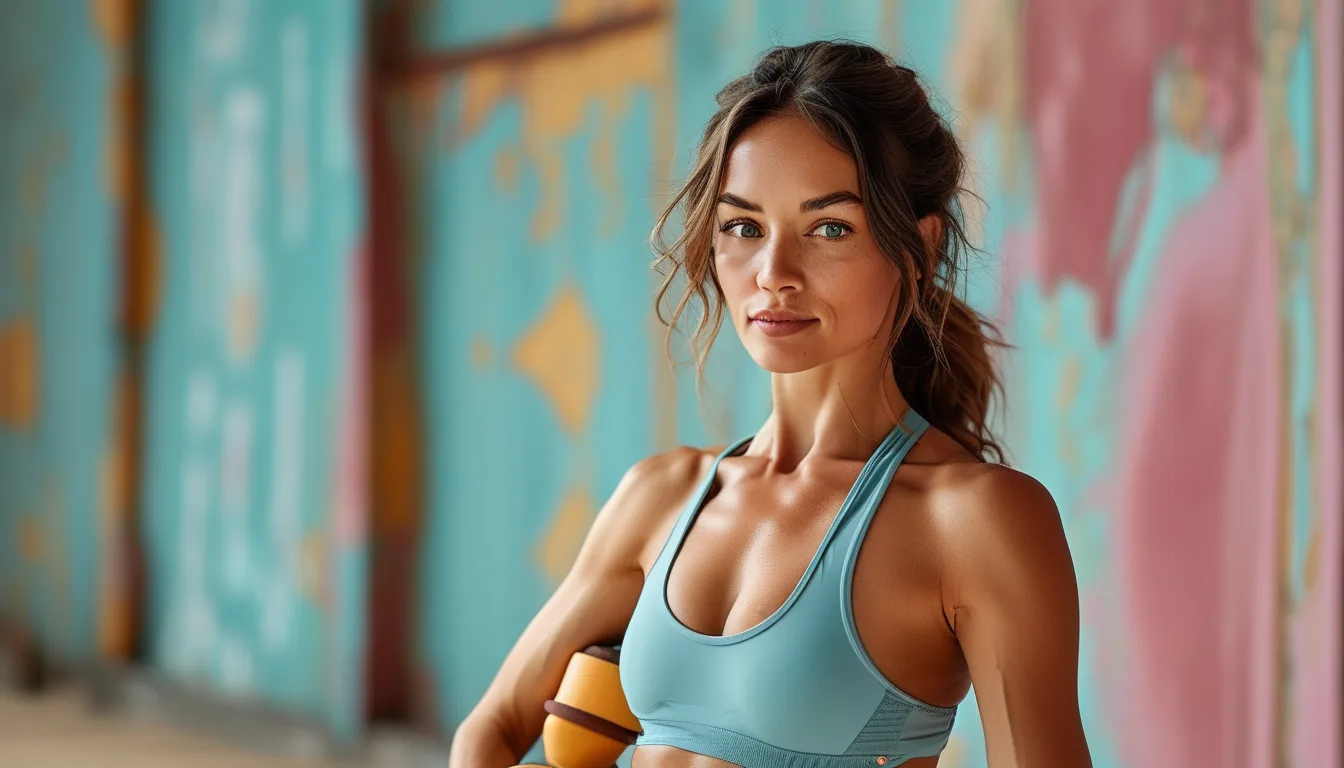
Where to Put Your Mat in a Sculpt Class and Why It Changes Everything
Quick Answer: Studio temperature varies substantially between spots — near the heat source and away from airflow runs hottest, and back corners are usually warmest because heat rises and collects. If you overheat, choose near a door or vent, along a side wall. If you struggle with form, choose where you can see the mirror and the instructor. And always choose near enough to the weight rack that swapping dumbbells does not cost you half a sequence.
Same class, same instructor, same playlist.
A metre and a half of floor position changes it more than any of those.
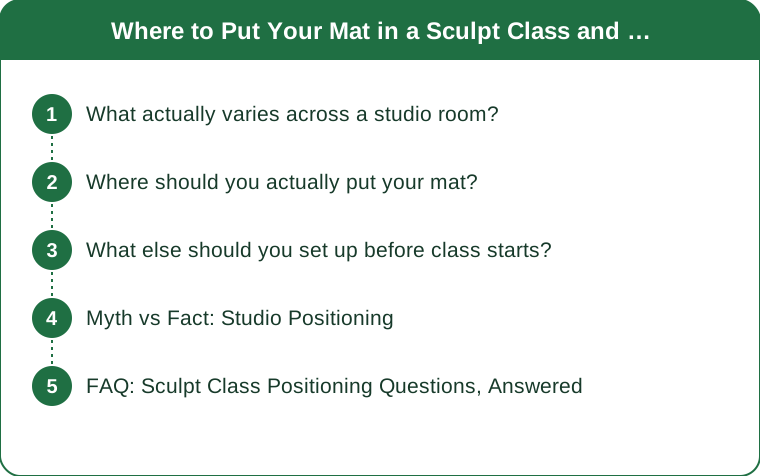
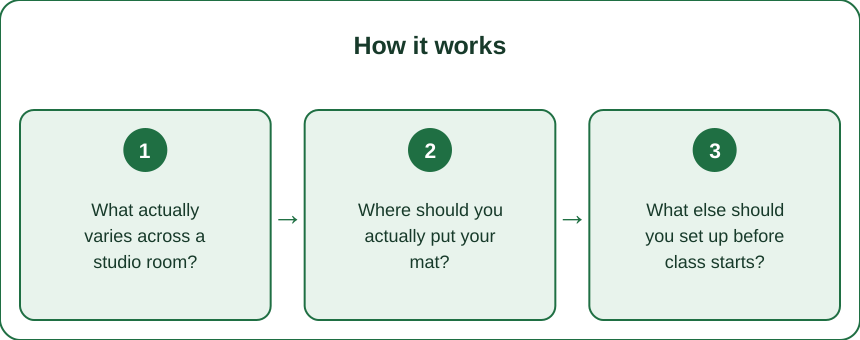
What actually varies across a studio room?
Five things, and the temperature difference is bigger than most people assume.
Temperature. Heat rises and pools, so back corners and any spot away from air movement run noticeably warmer. Positions near a door, a vent or an intake are cooler and get fresh air first. In a heated sculpt class this is not a minor preference — it is the difference between a challenging class and one you spend on your knees.
Airflow. Airflow removes the humid boundary layer of air sitting against your skin and lets sweat evaporate. Sweat evaporating is how you cool, so a spot with air movement feels dramatically cooler than a still spot at the same temperature.
Mirror access. Sculpt involves weights and unfamiliar loaded positions, and being able to check your own alignment matters more than it does in flow. A spot with a blocked mirror line means guessing.
Sightline to the instructor. Directly behind someone tall means you spend the class craning. Sculpt has more demonstrated positions than a familiar flow does, so this costs more here than elsewhere.
And distance to the weight rack. Sculpt classes often change weights mid-sequence. If you are three rows away from the rack, you are either late to every transition or you commit to one weight for the whole class.
Where should you actually put your mat?
Five profiles, five recommendations.
New to sculpt: middle of the room, mirror in view, near the weights. Close enough to see and hear, not so close that you feel exposed, and with an easy weight swap. The back corner is the worst place for a first class — no mirror, hardest to hear, and the hottest spot in the room.
Overheats easily: near a door or vent, along a side wall. Prioritise airflow over everything. Heat tolerance builds over several sessions, and there is nothing to prove.
Wants the hardest version: back corner, away from the door. The warmest, stillest air in the room. Go in knowing that is what you chose.
Working on form: front third, direct mirror line. You will get more correction from the instructor and more information from your own reflection.
Self-conscious: side wall, middle depth. Out of the direct centre, not in the back where everyone can see you but you can see nothing. The side wall is the underrated spot — good sightlines, less exposure, usually decent airflow.
And a practical note for a first visit: arrive early enough to choose. In September, popular sculpt classes fill fifteen minutes ahead, and by the time you arrive the only mat space left is the one nobody wanted.
What else should you set up before class starts?
Five things, and having them right where you need them matters more in sculpt than in almost any other class.
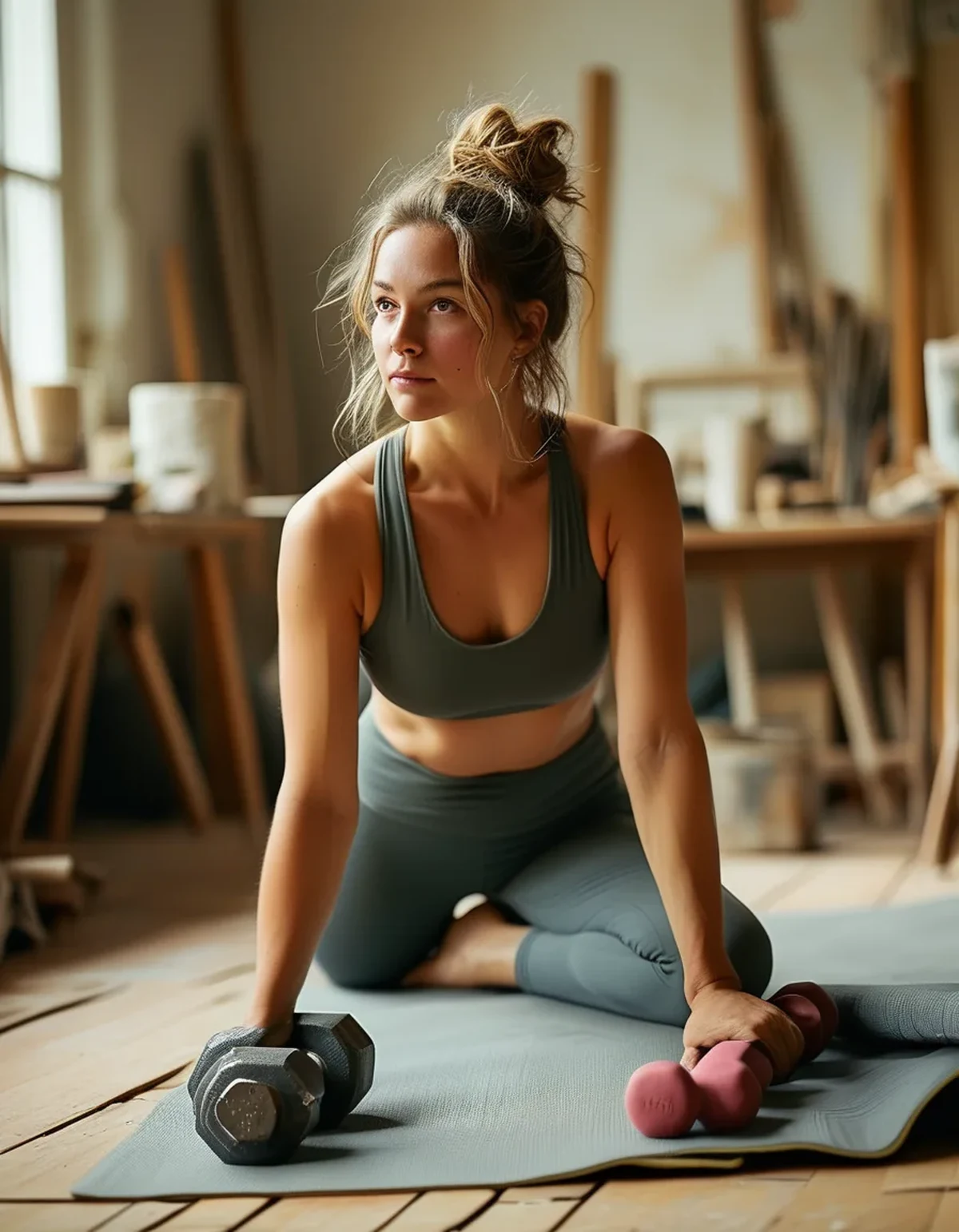
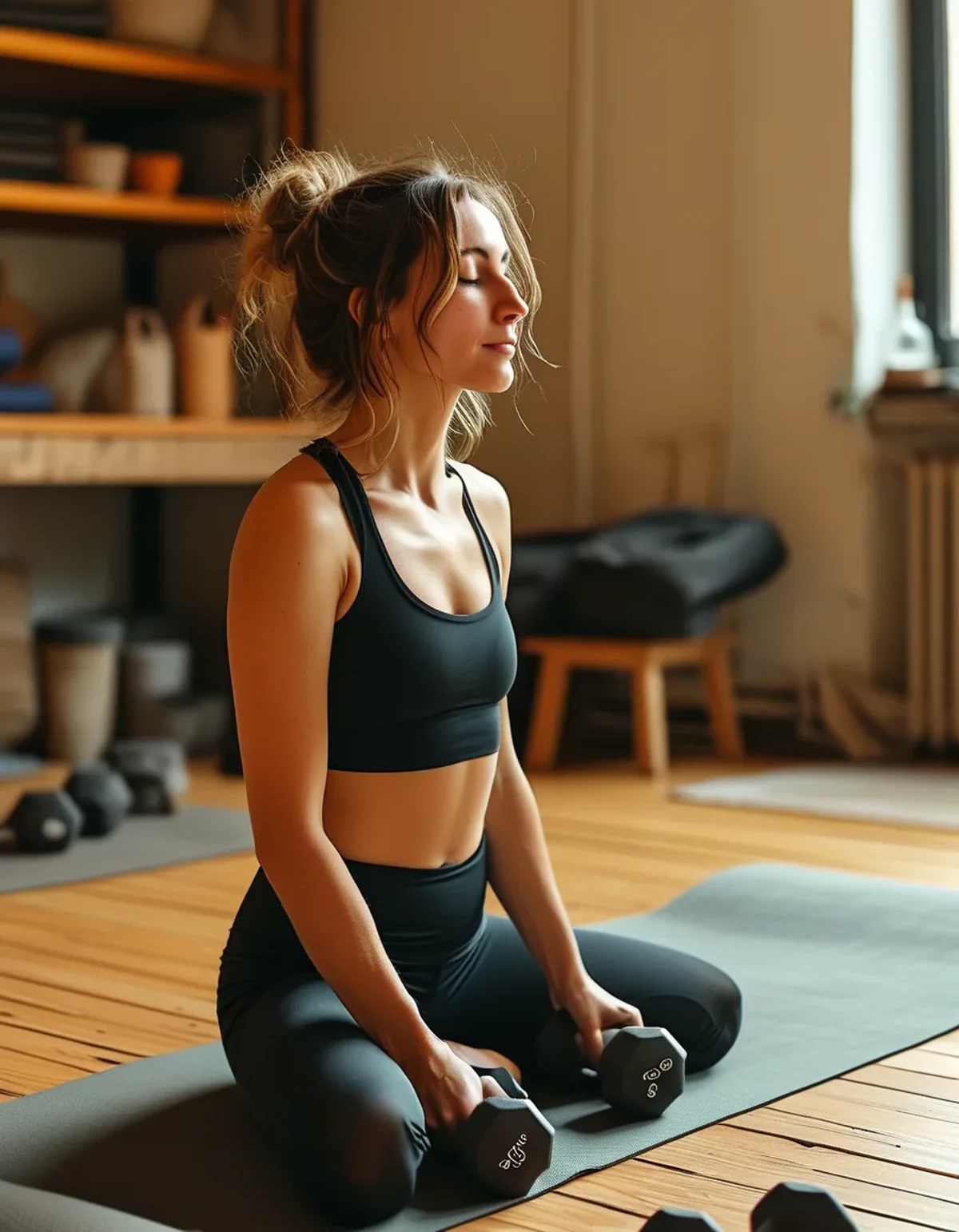
Two sets of weights, not one. Most sculpt sequences want a lighter pair for shoulders and a heavier pair for legs and back. Grab both at the start so you never have to leave your mat.
A towel on the mat, and a second one for hands. Grip is the limiting factor in half the sequences. Sweaty hands on a dumbbell during a warrior variation is a dropped weight, and a mat towel is standard for a reason.
Water within reach, already open. The seconds cost is trivial; the point is not creating a reason to disrupt the sequence.
Any props the studio uses, collected before you settle. Blocks are common in sculpt for supported positions.
And your position relative to the person next to you. Sculpt uses weights in wide arm positions — lateral raises, extended arms in warrior two. Leave more space than a flow class needs, because the swing radius is real and clipping a neighbour’s hand is an actual risk with a dumbbell.
This is general information, not medical advice — heated classes are not suitable for everyone, and if you are pregnant, have cardiovascular issues or a condition affected by heat, check with your doctor first.
Myth vs Fact: Studio Positioning
Myth: the back row is the beginner spot. Fact: it is the hardest — hottest air, worst sightlines, no mirror. The middle or side is where a first-timer should be.
Myth: the temperature is the same everywhere in the room. Fact: it varies noticeably between spots, particularly between corners and airflow paths, and heated rooms exaggerate the difference.
Myth: near the door means you look like you want to leave. Fact: nobody is interpreting your mat placement. It is the coolest spot with the freshest air, and experienced practitioners take it deliberately.
Myth: mirrors are for vanity. Fact: in a class with weights and loaded positions, the mirror is a form-checking tool and it does a job the instructor cannot do for twenty people at once.
Myth: everyone is looking at you. Fact: in a heated class at the point where everyone’s arms are burning, nobody has spare attention for anyone else’s mat.
Myth: you should stick to the same spot every time. Fact: moving around teaches you how the room actually behaves, and gives you options for the days you feel different.
FAQ: Sculpt Class Positioning Questions, Answered
Where is the coolest spot in a heated studio?
Near a door, a vent, or along a wall with air movement. Airflow lets sweat evaporate, which is how you cool.
Where is the hottest?
Back corners away from airflow. Heat rises and collects, and still air prevents evaporation.
Where should a first-timer go?
Middle of the room, mirror visible, near the weight rack. Not the back corner.
How many weights should I take?
Two pairs — one lighter for shoulder work, one heavier for legs and back. Most sequences want both.
How much space do I need between mats?
More than a flow class. Extended arms with dumbbells have a real swing radius, and studios often set mats closer than sculpt actually needs.
What if I overheat mid-class?
Sit down, or lie in a resting position, and drink. Dizziness, nausea or feeling faint means leave the room — that is not something to push through.
Does the mirror actually help?
In a class with weights, yes. Alignment under load is harder to feel than in bodyweight yoga.
TL;DR:
- Studio temperature varies genuinely by position — back corners are hottest, doors and vents coolest.
- The back row is the hardest spot, not the beginner spot. New? Middle of the room, mirror in view.
- Airflow beats temperature for how a heated class feels, because evaporation is how you cool.
- Take two pairs of weights, a mat towel, a hand towel and water before you settle.
- Leave more space than a flow class — extended arms with dumbbells have a real radius.
Try a different spot next class. It is the cheapest way to change how a sculpt class feels.
See It in Motion
Seen here: High Waist Embossed Yoga Leggings with Side Pockets — shop it on bubblelime.com
Keep Reading
This article is for general informational and styling purposes only. Fit, sizing, and product availability may vary.