Why Your Yoga Sculpt Weights Should Get Lighter, Not Heavier
Quick Answer: Yoga sculpt combines high repetitions, sustained positions, and elevated heart rate, which is a metabolic and endurance stimulus rather than a strength one. Heavier weights break the pattern that makes the class work - form degrades, positions shorten, and shoulders take load in ranges they cannot control. Progression here comes from tempo, range, and hold time, not from load.
You started with three-pound dumbbells, moved to five, and now you are eyeing the eights because the fives feel manageable.
In a strength class that instinct is exactly right. In yoga sculpt it usually produces a worse class, and the reason is what the format is actually training.
What is yoga sculpt actually training?
Muscular endurance and metabolic conditioning, with mobility maintained through range - not maximal strength.
The rep ranges tell you. Yoga sculpt typically involves twenty, thirty, or more repetitions of a movement, often while holding a lunge or a squat position. That volume, at that pace, with that little rest, sits firmly in the endurance and conditioning range.
Maximal strength needs the opposite conditions - heavy load, low repetitions, substantial rest between sets, and full recovery. A class that never lets your heart rate drop cannot deliver that, and adding heavier dumbbells does not change the structure around them.
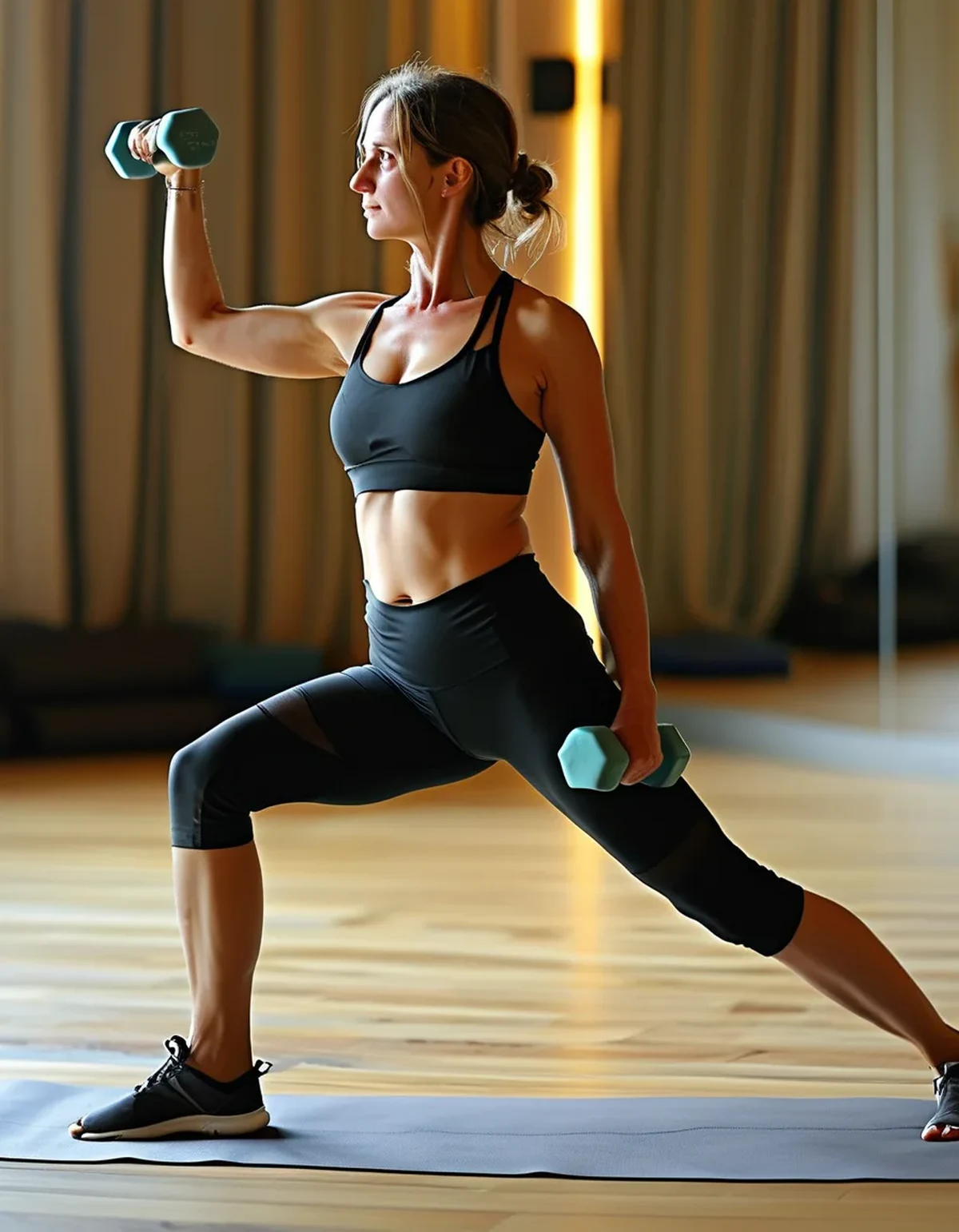
The positions are the actual load. A sustained warrior or chair position with light weights is already demanding, because the legs are working isometrically while the arms move. The dumbbells are adding to a base that is already substantial.
Shoulders are the specific risk. Many yoga sculpt arm movements happen at or above shoulder height, at speed, for high repetitions, while you are fatigued and holding a lower body position. That is a demanding combination for the shoulder joint even with light weights, and it becomes genuinely risky with heavy ones.
So going heavier does not make it a strength class. It makes it the same conditioning class performed with worse form and more joint stress.
What does progression look like instead?
Five levers, all of which increase the demand without adding load.
Slow the tempo. A three-second lowering phase on every repetition transforms a set of light dumbbell work into something considerably harder. Tempo is the most underused progression in every class format.
Increase the range. Fuller movements through the whole available range, rather than the shortened versions fatigue produces. More range means more work and more mobility benefit.
Hold the positions lower and longer. Sinking deeper into the lunge or chair position while the arms work is where the real difficulty lives. Most people unconsciously rise up as the arm work gets hard, and resisting that is a genuine progression.
Reduce the rest between sequences. Staying in the position through transitions rather than standing up between them.
Improve the quality under fatigue. Maintaining alignment in the last third of a class, when everyone else is compensating, is a real and measurable improvement.
And add strength training separately if strength is the goal. Yoga sculpt is a good complement to a strength program and a poor substitute for one. Two sessions a week of proper progressive resistance work, plus sculpt for conditioning and mobility, gets you both - and trying to make one class do both jobs results in it doing neither well.

Myth vs Fact: Weights in Yoga Sculpt
Myth: Heavier weights mean you are progressing. Fact: In a high-repetition class held in demanding positions, heavier weights usually mean shorter range, faster tempo, and compensating positions. That is the appearance of progress with the substance removed.
Myth: Light weights are for beginners. Fact: Experienced practitioners frequently use lighter weights than newcomers, because they are moving through fuller range at a slower tempo in a deeper position. The weight is a poor proxy for the difficulty of what someone is doing.
Myth: You cannot build any strength with light weights. Fact: High repetitions to near-fatigue does produce strength and muscle adaptation, particularly for people newer to resistance training. It is less efficient than heavier work for that specific goal, and it is not nothing.
Myth: Yoga sculpt is a complete workout. Fact: It is a good conditioning and endurance session with mobility built in. It does not provide the progressive heavy loading that bone density and maximal strength benefit from, both of which matter increasingly with age.
Myth: The heat makes it more effective. Fact: Heated classes increase heart rate, sweat, and perceived effort, and the extra sweat is fluid rather than a measure of work done. Heat also increases the risk of pushing past a sensible range because tissues feel more compliant than they are.
Myth: If you are not sore, it did not work. Fact: Soreness reflects novelty and eccentric loading more than session quality, and a class you handle well with excellent form is often a better session than one that leaves you wrecked.
How should you approach a class practically?
With a plan for the weights rather than a default.
Bring two sets of dumbbells if the studio allows. A lighter pair for overhead and lateral shoulder work, a heavier pair for rows, chest work, and lower body movements. Using one weight for everything means it is too heavy for the shoulders or too light for everything else.
Choose the weight for the hardest movement in the sequence, not the easiest. If the sequence includes lateral raises, that movement sets the weight.
Put the weights down when your form goes. This is the single most useful habit in the format. Continuing a set with degraded form in a fatigued shoulder position is where the injuries in this class come from, and dropping the dumbbells and continuing with bodyweight is not quitting - it is the correct response.
Sit near the back for your first few classes so you can watch rather than rush, and take the modifications the teacher offers.
Hydrate more than you think in a heated class, and be realistic about how you respond to heat. Feeling lightheaded is a signal to rest, not to push through.
And tell the teacher about any shoulder, wrist, or back issues before class. Nearly all of the movements have modifications, and a good teacher will offer them if they know.
One seasonal note: heated sculpt classes fill up sharply from September onward as the weather turns, and the warm room is a genuine draw in autumn. If you are returning after a summer away, go lighter than where you left off for the first two or three classes - the endurance component decays faster than people expect.
This is general fitness information rather than personal instruction. If you have an injury or a medical condition, get advice from a professional who can see you move.
FAQ: Yoga Sculpt Weight Questions, Answered
What weight should I actually use?
Most people are well served by two to five pounds for overhead and lateral work, and five to ten for rows, chest, and lower body movements. If you cannot complete the sequence with control, it is too heavy.
How often should I take sculpt classes?
Two to three times a week works well for most people, with other training around it. It is demanding enough that daily attendance tends to produce fatigue rather than progress.
Will yoga sculpt build muscle?
Some, particularly for people newer to resistance training, and it plateaus relatively quickly because the load cannot progress much. For continued muscle and strength development, add a progressive resistance program alongside it.
Should I do sculpt or regular yoga?
Different goals - sculpt for conditioning and muscular endurance, traditional yoga for mobility, breath, and the practice itself. Many people do both, and neither replaces a strength program if strength is what you want.
TL;DR:
- Yoga sculpt is a muscular endurance and conditioning format, not a strength one, so heavier dumbbells break the pattern rather than advancing it.
- Progress with slower tempo, fuller range, deeper and longer held positions, and better form under fatigue.
- Bring two weights - lighter for overhead and lateral shoulder work, heavier for rows and lower body - and put them down the moment form goes.
- If strength is the goal, add a separate progressive resistance program rather than trying to make one class do both jobs.
The fives feeling manageable is not a signal to reach for the eights. It is a signal to slow down, sink lower, and hold it longer.
See It in Motion
Seen here: High Waist Bootcut Yoga Pants with Pockets — shop it on bubblelime.com
Keep Reading
This article is for general informational and styling purposes only. Fit, sizing, and product availability may vary.