Choosing Dumbbell Weight for Yoga Sculpt: Why 5 Pounds Is the New Heavy
Quick Answer: Yoga sculpt runs on high repetitions, long isometric holds, minimal rest, and often a heated room — a format where 3-to-8-pound dumbbells deliver what 20s deliver in a gym set. Most newcomers do best with two pairs: a light set (2 to 3 pounds) for shoulder-heavy sequences, overhead work, and pulses, and a moderate set (5 to 8 pounds, up to 10 for the strength-trained) for squats, lunges, and rows. The test is the last three reps of the longest sequence: shaky but controlled is right, form collapse is too heavy, bored is too light. When it gets easy, add reps and slow the tempo before you add pounds.
Nobody has ever left their first sculpt class saying the threes were too light. Not once the third song ends.

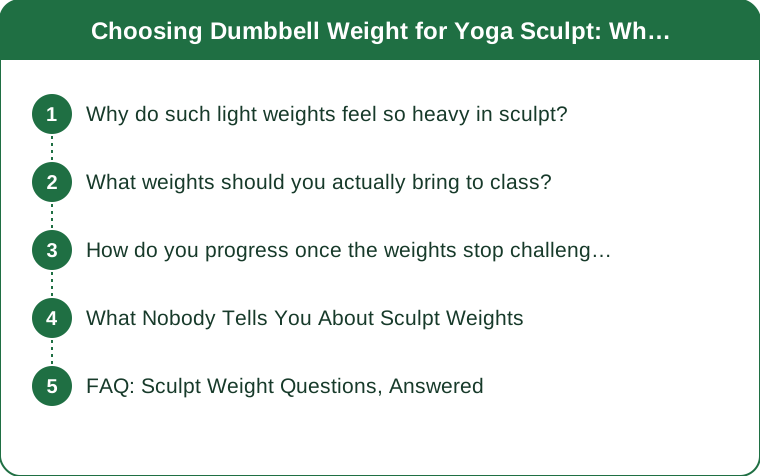
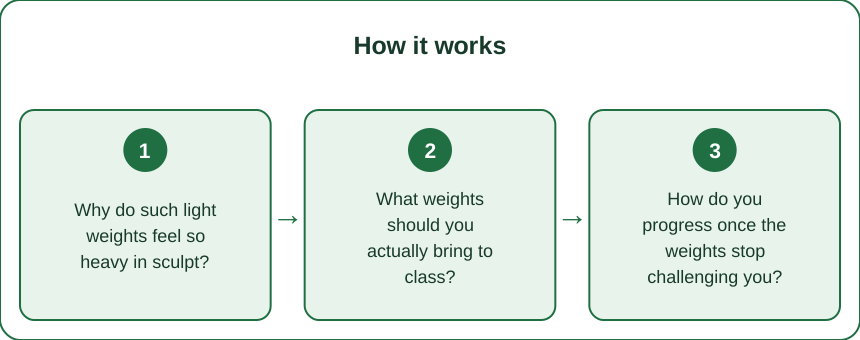
Why do such light weights feel so heavy in sculpt?
Because the format removes every recovery mechanism a gym set relies on.
Gym math: 8 to 12 reps, rest, repeat. Muscles work hard, then fully recharge for two minutes. Sculpt math: a shoulder series might run 60-plus repetitions across curls, presses, raises, and pulses with no rest — then flow into a plank. Time under tension is the currency, and sculpt pays in it lavishly; a 3-pound weight moved continuously for four minutes accumulates more total work than most people expect from a number that small.
Isometric holds change the equation further. Warrior II with arms extended, weights in hands, for a full minute: the muscle burns fuel and accumulates fatigue the entire hold with zero movement — a demand gym training barely visits, landing mostly on the small shoulder muscles with the least endurance.
Small muscles set the ceiling. Sculpt sequences live in lateral raises, front raises, overhead holds, and triceps work — territory owned by small muscle groups where even gym-strong lifters use surprisingly modest loads. Your squat strength does not carry your side-raise endurance, which is why strong newcomers get humbled by the threes.
Heat and pace tax the same account. Many sculpt classes run warm to hot, and cardiovascular load plus grip on sweaty handles plus no rest means systemic fatigue arrives alongside muscular fatigue.
And the postures double-bill you. Every weighted move happens inside a lunge, a chair, a balance — your legs and core are paying rent underneath the entire arm series. The dumbbell number describes only a fraction of what is actually being held up.
What weights should you actually bring to class?
Two pairs, chosen by the longest sequence — not the strongest single move.
The standard newcomer kit:
Light pair, 2 to 3 pounds: for the marathon shoulder series, overhead holds, pulses, and anything performed inside a balance posture. This pair does the most minutes of the class.
Moderate pair, 5 to 8 pounds: for squats, lunges, rows, chest presses, and hinge work — the big-muscle moves that shrug at threes. Regular strength trainers can run 8s or 10s here; almost no one benefits from more inside sculpt’s rep counts.
Why two pairs is the actual answer: a single weight is wrong for half the class in either direction — too heavy for minute-long overhead holds, too light for goblet squats. Studios stock pairs for exactly this reason; home practitioners should own both before owning anything else.
Calibrate with the last-three-reps test. In the longest sequence of class, the final reps should be shaky, slow, and burning — but performed with the same form as rep one. That is the correct weight working. Form breaking — shrugging shoulders to the ears, arching the low back on presses, swinging momentum — means drop a weight mid-class without ceremony. Cruising through pulses while planning dinner means the light pair got too light.
Adjust for your context: heated classes rate everything a notch harder — first-timers in hot sculpt should err lighter. Coming back postpartum, from injury, or after a long break, start with the 2s-and-5s kit regardless of history. And downgrading mid-class is technique, not defeat — instructors do it themselves, and the shoulder series is famous for converting confident 8s into grateful 3s by the bridge of the song.
Sweaty grip is part of the weight decision too: neoprene-coated bells and a small towel keep a 5 from becoming a projectile, and a fitted workout top that stays put beats re-adjusting mid-flow.
How do you progress once the weights stop challenging you?
Reps, tempo, range, and holds first — pounds last. Sculpt progression is a dial set, not a rack climb.
First lever: repetitions and sequences. Follow the advanced rep counts when offered, skip the mid-series shakeout everyone else takes, add the optional pulse round. More continuous work at the same load is sculpt’s native progression and it costs zero form risk.
Second lever: tempo. Slow every lowering phase to three counts — a 3-pound lateral raise lowered slowly is a different exercise than one dropped. Tempo is the most underrated dial in the entire format and instructors quietly use it constantly.
Third lever: range and position. Full range instead of comfortable range; arms fully extended instead of softly bent; performing the arm series in a deeper chair or a genuine lunge. The posture underneath is half the load — deepen it and the same dumbbells get heavier.
Fourth lever: shrink the rest. Keep weights raised during transitions the instructor allows lowering through; hold the last rep as an isometric while others reset.
Only then: add pounds, in the smallest step available — 3s to 5s, 5s to 8s — and expect to apply the new weight to the big moves first while keeping the old pair for shoulders, possibly forever. The shoulder series does not respect ego timelines.
Know what sculpt progression is for. These dials build endurance, work capacity, and definition beautifully; they are not a substitute for progressive heavy strength training if bone density and maximal strength are goals — the two formats complement rather than replace each other, and plenty of strong lifters keep sculpt as their conditioning-and-burnout day.
This is general fitness guidance. Shoulder pain during overhead series — as opposed to burn — is a form-and-load conversation with the instructor, not something to breathe through.
What Nobody Tells You About Sculpt Weights
The 3-pound humbling is a universal rite. Every gym-strong newcomer reaches for 10s, and every instructor watches it happen with a knowing face. By the second shoulder track the 10s are on the floor. It is not a strength failure — it is a different sport scoring a different attribute.
Instructors demo with the light weights. Watch closely: the person teaching, cueing, and performing every rep of every track is usually holding 3s or 5s. That is not modesty; that is someone who knows exactly what sixty consecutive reps cost.
Soreness lands in unfamiliar places the first week. Side delts, triceps, the mid-back between the shoulder blades, and oddly the forearms from gripping — muscles a gym routine touches briefly and sculpt occupies for whole songs. It settles within two or three classes.
The burn is the format working, not lactic-acid folklore coming true. That deep muscle burning during pulse counts is the sensation of local fatigue under continuous tension — the exact stimulus the class is built to produce. Shaky-but-controlled through the burn is the win condition.
Grip fatigue is a real limiter nobody warns about. An hour of holding bells — often sweaty — taxes forearms enough that late-class rows feel weaker than your back actually is. Neoprene bells and periodically loosening the death grip help more than heavier weights ever would.
And the leggings audit matters more here than most classes: sculpt is lunges, chairs, and floor work in a heated room — squat-proof leggings with a stay-put waistband earn their reputation on exactly this hour.
FAQ: Sculpt Weight Questions, Answered
Are 3-pound weights really enough to build anything?
Inside sculpt’s format — high reps, holds, no rest — light weights produce genuine muscular endurance, work capacity, and tone, especially for newer exercisers. For maximal strength and bone loading, pair sculpt with traditional progressive training; the formats stack beautifully.
What weights should I bring to my first class?
A 2-to-3-pound pair and a 5-to-8-pound pair, and use the studio’s rack to swap freely. Err lighter in heated classes. You can always grab heavier next week; grinding through a shoulder series over-weighted teaches nothing but bad presses.
Why do my shoulders give out before anything else?
Because sculpt’s signature sequences target the small shoulder muscles with rep counts they rarely see elsewhere, often overhead, often inside holds. It is the format’s designed bottleneck — the light pair exists specifically for those tracks, and endurance builds within weeks.
When should I move up in weight?
When the last three reps of the longest sequences stop being shaky at your current weight even after you have added tempo and skipped the rest breaks — typically several weeks per step. Move the big moves up first and let the shoulder-series weight lag behind without shame.
TL;DR:
- Sculpt’s high reps, isometric holds, heat, and zero rest make 3-to-8-pound weights deliver what 20s deliver in gym sets.
- Bring two pairs: 2-to-3s for the shoulder series and overhead holds, 5-to-8s for squats, lunges, and rows.
- Calibrate by the last three reps of the longest sequence — shaky but clean is right; form collapse means drop mid-class, boredom means climb.
- Progress through reps, tempo, range, and shorter rests before adding pounds; keep real strength training in the week if bone and max strength are goals.
Pack the 3s and the 5s for your next class and watch the instructor’s rack choice. The light pair is about to earn your respect by song three.
See It in Motion
Seen here: High Waist Embossed Yoga Leggings with Side Pockets — shop it on bubblelime.com
Keep Reading
This article is for general informational and styling purposes only. Fit, sizing, and product availability may vary.