Why Yoga Sculpt Makes You Sorer Than Regular Yoga (And What That Means)
Quick Answer: Yoga sculpt combines held isometric poses with added weight and cardio bursts, which creates more muscular micro-tearing than flow-based yoga alone — that’s why soreness (DOMS) after sculpt is often closer to a strength workout than a typical vinyasa class. It’s expected, not a sign you overdid it.
You walked in expecting a ‘yoga class’ and walked out unable to lift your arms the next morning. That gap between expectation and reality is the single most common surprise first-timers report about sculpt.

Why is yoga sculpt more physically demanding than regular yoga?
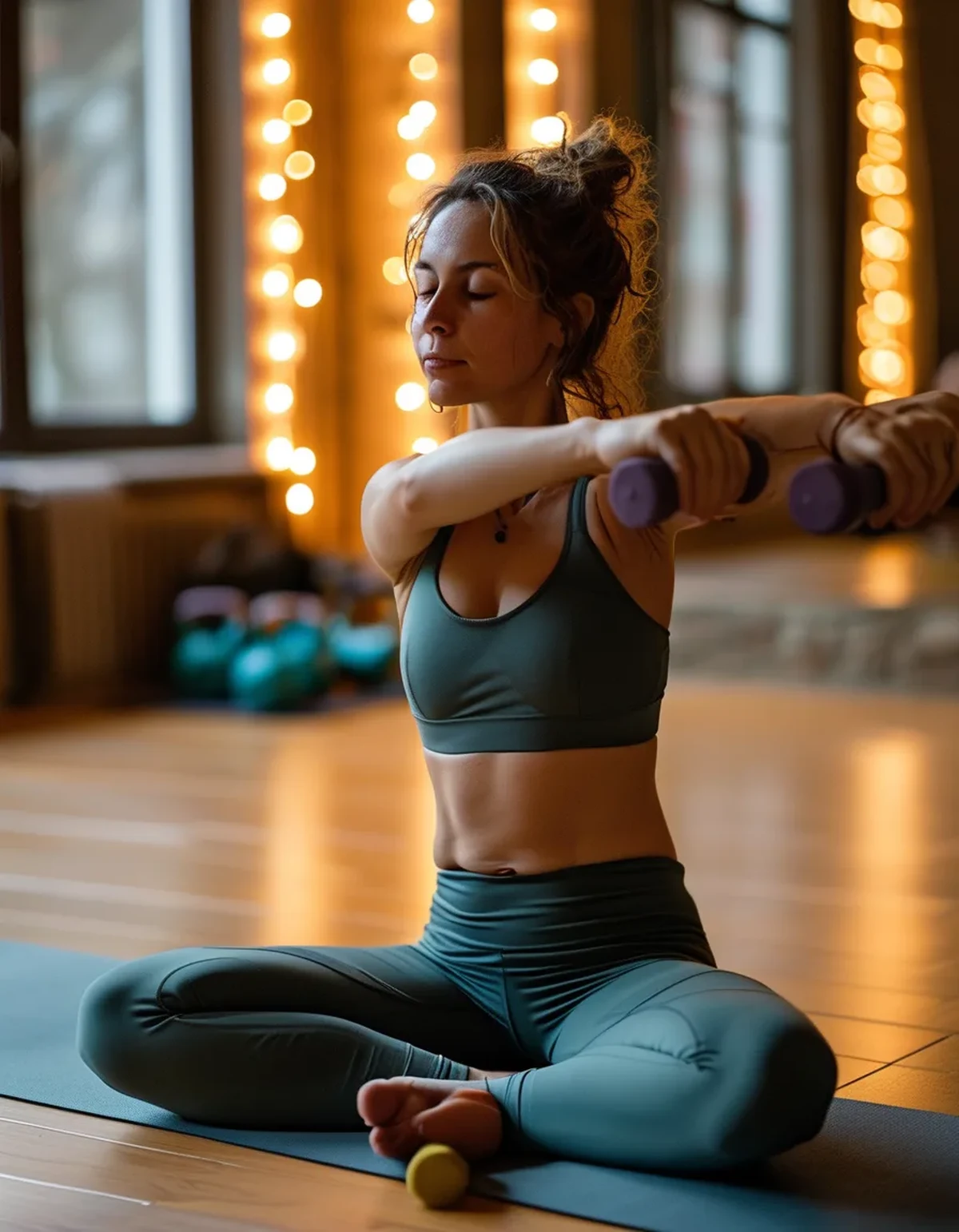
Sculpt layers three demanding elements that standard yoga classes don’t combine: held isometric holds (like a weighted chair pose for 60+ seconds), added external resistance from dumbbells, and cardio intervals between sets. Each element alone creates some muscle fatigue — stacked together, they produce a soreness response closer to a hybrid strength-and-conditioning class.
Isometric holds specifically are known to cause significant delayed-onset muscle soreness (DOMS) because the muscle stays under tension without the lengthening-shortening cycle that regular movement provides.
Is this level of soreness actually a good sign?
Moderate soreness lasting 24-48 hours is a normal adaptation response and generally means the muscle experienced enough new stress to trigger a strength adaptation — it isn’t required for progress, but it’s not something to be alarmed by either.
What’s worth paying attention to is sharp joint pain versus general muscle soreness — the first is a signal to modify your form or reduce weight next time, while the second is just your muscles adapting.
5 Mistakes People Make Their First Few Sculpt Classes
1. Grabbing weights that are too heavy too soon. Sculpt rewards control under fatigue more than raw weight — start lighter than you think you need.
2. Skipping the cooldown stretch. The isometric holds tighten muscles significantly; skipping the stretch segment makes next-day soreness noticeably worse.
3. Not hydrating beforehand. The cardio-and-heat combination in most sculpt studios dehydrates faster than a typical yoga class.
4. Comparing it directly to vinyasa flow. Expecting the same gentle intensity sets you up for a rough surprise — treat your first class like a strength class, not a stretch class.
5. Going back-to-back on consecutive days as a beginner. Muscles need 48 hours to recover from this level of new stress; back-to-back sessions early on often backfire into burnout rather than progress.
FAQ: Yoga Sculpt Soreness Questions, Answered
How long should soreness from yoga sculpt last?
Typically 24-72 hours for a new or returning practitioner; soreness lasting much longer or accompanied by swelling is worth checking with a professional.
Should I still stretch if I’m very sore the next day?
Yes — gentle movement and light stretching generally help circulation and can ease soreness faster than complete rest.
Does the soreness go away as you get more consistent?
Usually, yes — most people report significantly less soreness after their first 3-4 sessions as the muscles adapt to the isometric-plus-weight combination.
This is general information, not medical advice.
TL;DR:
- Sculpt’s isometric holds plus added weight create more DOMS than flow-based yoga
- Moderate 24-48 hour soreness is a normal adaptation, not overtraining
- Sharp joint pain is different from muscle soreness and deserves attention
- Soreness typically decreases significantly after the first few consistent sessions
The soreness isn’t a sign the class was ‘too much’ for you — it’s a sign your muscles just did more work than a typical yoga label led you to expect.
See It in Motion
Seen here: Racerback Tank Top - White — shop similar styles on bubblelime.com
Keep Reading
This article is for general informational and styling purposes only. Fit, sizing, and product availability may vary.