Why Your Yoga Sculpt Results Stalled Even Though You Never Skip Class
Quick Answer: Yoga sculpt plateaus usually happen because the weight stays the same class after class — without progressive overload (gradually increasing weight or reps over time), your muscles have no new stimulus to adapt to, regardless of how consistently you attend.
You haven’t missed a class in three months. Your effort hasn’t dropped. And yet the mirror and the scale both look exactly like they did in month one. Consistency alone isn’t the missing piece here.

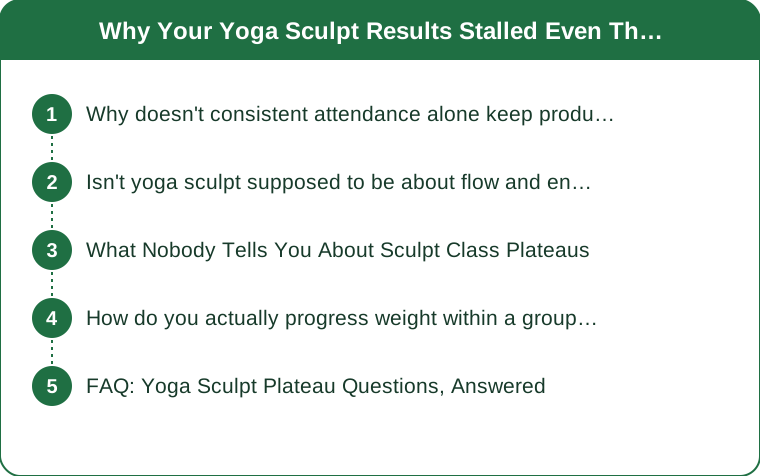
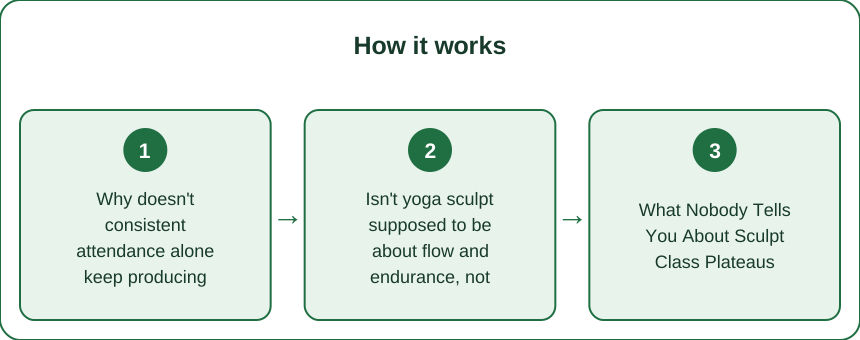
Why doesn’t consistent attendance alone keep producing results?
Because your body adapts to a specific stimulus and then plateaus at that level — if you’re using the same 5-pound weights for the same rep ranges class after class, your muscles have already adapted to that exact demand and have no reason to keep changing.
This is true even if you’re sweating hard and feeling challenged each class — perceived effort and actual progressive stimulus aren’t the same thing, especially in a class format where weight selection is largely up to you.
Isn’t yoga sculpt supposed to be about flow and endurance, not heavy lifting?
That’s true for the cardio and flexibility side, but the strength-building component still follows the same progressive overload principles as any resistance training — the flow format doesn’t exempt your muscles from needing increasing demand to keep adapting.
Many class-goers under-select weight specifically because heavier weights feel awkward to manage during flow transitions, which is understandable but is often the direct cause of a strength plateau.

What Nobody Tells You About Sculpt Class Plateaus
Instructors rarely tell you when to size up your weights — that decision is left entirely to you, and most people default to whatever weight felt comfortable in their very first class and never revisit it, sometimes for years.
The surprising part is how small the needed change often is — moving from 5 to 8 pounds, or adding just a few reps within the format, is often enough to restart visible progress, but almost nobody does it without being told to.
How do you actually progress weight within a group class format?
Bring a slightly heavier set than you think you need and use it for the strength-focused segments specifically, even if it means modifying slightly during faster flow transitions.
A simple rule: if the last 2-3 reps of a strength segment don’t feel genuinely challenging, your weight is too light for where your body currently is — that’s your signal to size up next class.
FAQ: Yoga Sculpt Plateau Questions, Answered
How often should I increase my sculpt class weights?
A reasonable check-in point is every 4-6 weeks — assess whether your current weight still feels challenging in the last few reps of strength segments.
Could diet be the actual issue instead of weight progression?
It’s possible — if body composition specifically has stalled, nutrition is worth examining alongside training, but weight stagnation is a common and often-overlooked contributor.
Is it normal to need heavier weights than what the studio provides?
Yes — many studios’ house weights top out lower than experienced lifters need; bringing your own heavier set is common and totally fine.
TL;DR:
- Plateaus usually come from using the same weight repeatedly, not lack of effort or consistency
- The strength component of sculpt still requires progressive overload like any resistance training
- Most people never revisit their initial weight selection, sometimes for years
- Check in every 4-6 weeks — if the last reps aren’t challenging, it’s time to size up
Showing up isn’t the missing piece — giving your muscles a reason to keep changing is.
See It in Motion
Seen here: UPF 50+ Racerback Yoga Tank Top — shop it on bubblelime.com
Keep Reading
This article is for general informational and styling purposes only. Fit, sizing, and product availability may vary.